


Finding a crypto lawyer in 2026 feels different than it did a few years back. Back then, any corporate attorney with a passing interest in blockchain could handle your application. Now regulators expect specialized knowledge. They want to see that your legal team has done this before, multiple times, in the jurisdiction you are targeting.
The firms that thrive today are the ones that do nothing but crypto licensing work. Their lawyers have handled applications across dozens of countries. They know which regulators ask tricky follow-up questions. They know which banks are opening accounts for licensed crypto firms this month. That kind of knowledge does not come from reading news articles. It comes from submitting applications, getting responses, and doing it again hundreds of times.
This list looks at legal firms that focus exclusively on crypto licensing. Each brings something different to the table. Some build complex multi-jurisdiction structures. Others specialize in fast entry into specific markets. The choice depends on where you want to operate and how much ongoing support you need after the license arrives.
How to Evaluate a Crypto Lawyer in 2026
A good crypto license service provider does not just know the application process. They know which jurisdictions have backlog issues right now. They know which regulators recently changed their interpretation of certain rules. They know which compliance systems actually hold up during an audit.
The firms listed here have all done this work hundreds of times. Their reputations come from handling the messy parts of licensing that founders do not think about until they are in the middle of it.
1. Gofaizen & Sherle
Gofaizen & Sherle operates as a legal consulting firm for crypto businesses that handles everything from jurisdiction selection to post-license compliance. They have supported a lot of crypto licensing projects across more than 50 jurisdictions. That number matters because each application teaches them something new about how different regulators operate.
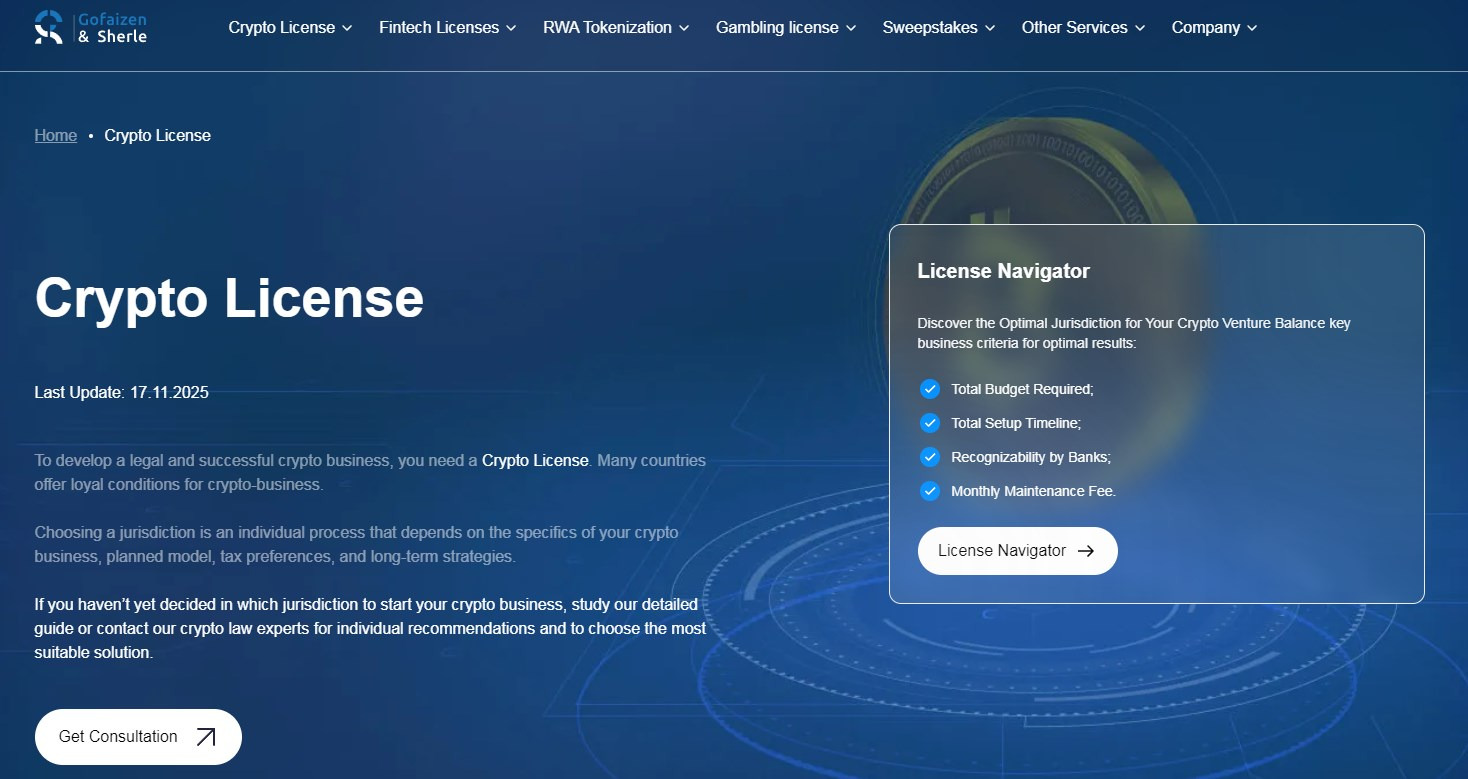
Gofaizen & Sherle legal consulting services for crypto business setup start with a question most firms skip: where does this business actually belong? They use an in-house tool called Crypto License Navigator that balances budget, timeline, bank accessibility, and monthly maintenance costs to recommend specific jurisdictions. It turns a decision that usually relies on forum posts and guesswork into something data-driven.
In Canada, they help clients register as Money Services Businesses (MSB) with FINTRAC, which requires no minimum capital and allows foreign companies to operate without a physical presence. The two-tier Canadian system means federal AML oversight from FINTRAC plus provincial securities rules from CSA when crypto assets qualify as investment contracts. Their legal consultants for crypto licensing navigate both layers.
In El Salvador, they have already secured DASP licenses for multiple clients, putting them among the firms that helped shape how that jurisdiction operates. Only about 40 companies hold this license, and Gofaizen & Sherle clients account for four of them. The DASP license covers everything from exchange operations to token issuance, with zero corporate income tax on digital asset transactions.
A client who hires them for a legal service to obtain a crypto license and legal consulting services for crypto business setup gets more than paperwork. Company registration happens. Policy drafting happens. Then the conversations with regulators. Then the compliance systems that keep everything running afterward.
As a specialized crypto licensing firm, they run legal, corporate, and compliance infrastructure across multiple countries from a single point. Clients say the same thing over and over: they respond fast. When regulatory situations get too tangled, other firms walk away. Gofaizen & Sherle stays in.
What makes them different: They act as a legal consulting firm for crypto business that builds regulatory structures for long-term growth. Their crypto lawyers work across Europe, North America, Latin America, and Asia, making them a good fit for projects planning to expand beyond a single market. They have helped clients hire 200+ professionals worldwide, including compliance officers and top management.
Gofaizen & Sherle experts recommend starting with a clear inventory of your planned services before picking a jurisdiction. Their team has seen how different business models fit different regulatory frameworks across their 50+ jurisdiction footprint.
Best for: Crypto exchanges, custodial services, tokenization platforms, and DeFi projects that need a specialized legal firm for obtaining crypto license across multiple countries without juggling five different law firms.
2. DLT LAW
DLT LAW started in 2017 as a firm run by people who had already been building in crypto. Offices in Tel Aviv, Cyprus, Dubai, Switzerland, and the US. Their team has spent nearly ten years inside the ecosystem, not looking at it from the outside. They mix traditional legal training with knowing how blockchain actually works.
Their licensing work covers applications across multiple countries. They file the forms. They talk to regulators. They put together the policies and evidence regulators want to see. They manage the whole thing until approval comes through. Their regulatory strategy side helps clients figure out what licenses they need in the first place, map out which rules apply, and draw lines that keep them out of trouble.
They also handle commercial contracts, cross-border tax, privacy programs, and token issuance. Their forensics team traces on-chain flows and builds reports that hold up in front of regulators and judges.
What makes them different: They only do crypto work. Five offices across the globe. Partners run a podcast on crypto law and teach the subject. They go from token design all the way to regulatory approval under one roof.
Best for: Projects that want a law firm that only touches crypto and operates across multiple regions.
3. Legal Nodes
Legal Nodes runs a network. They match crypto businesses with local law firms in over 20 jurisdictions. Someone brings them a business model, target markets, and goals. Legal Nodes looks at that and points to where the regulatory environment fits best. Their partners handle incorporation and licensing. Legal Nodes keeps the whole thing moving.
They provide expert analysis of regulatory frameworks, cost optimization, and tax analysis, and ongoing support to help companies stay compliant as regulations change. Their partners help with appointing qualified personnel, implementing compliance procedures, and meeting capital or physical presence requirements.
The company has worked with over 400 crypto businesses and operates with a project management model that keeps costs lower than traditional law firms.
What makes them different: They skip the one-firm-fits-all model. They built a network of local specialists and picked the right one for each jurisdiction. Clients get one coordinator instead of hunting down lawyers in every country themselves.
Best for: Crypto businesses that plan to operate across multiple jurisdictions and do not want to manage separate law firms in each one.
4. Samson Solutions
Samson Solutions offers crypto licensing services across five European jurisdictions: Czech Republic, Lithuania, Poland, Estonia, and Slovakia. They publish transparent pricing tables showing share capital requirements, corporate tax rates, local staff requirements, physical office needs, project timelines, and total costs for each jurisdiction.
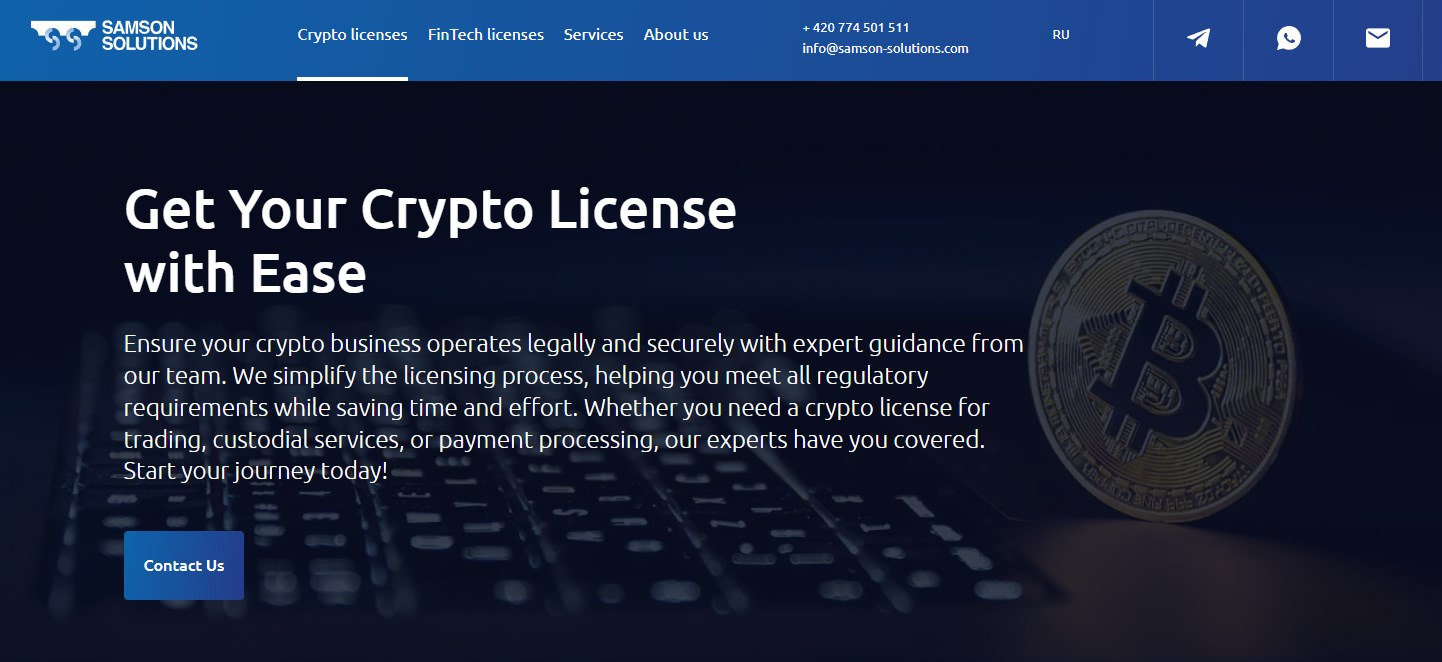
In the Czech Republic, they offer licensing with no share capital requirement, no physical office required, and a three-week timeline starting at 1,900 EUR. In Lithuania, they handle the 125,000 EUR capital requirement, physical office setup, and placement of an AML officer on an 8-week timeline for 6,500 EUR. They also provide MSB registration support in Canada.
Clients who worked with them leave testimonials about successful licensing and compliance support that kept going afterward. Samson Solutions handles company registration, document prep, regulatory filing, compliance setup, and everything that comes after approval.
What makes them different: They publish pricing tables. No guessing. Costs, timelines, and requirements are all laid out for each jurisdiction. The Czech Republic takes three weeks from start to finish. Few firms move that fast.
Best for: Projects that want fixed costs and quick entry into specific European countries.
5. Stalirov & Co
Stalirov & Co is an IT law firm that advises crypto startups on jurisdiction selection and licensing across the US, Europe, Asia, and offshore jurisdictions. Their detailed guides cover capital requirements, regulatory requirements, AML compliance, taxes, country reputation, licensing criteria, registration speed, banking access, regulatory trends, and cybersecurity and tech audits.
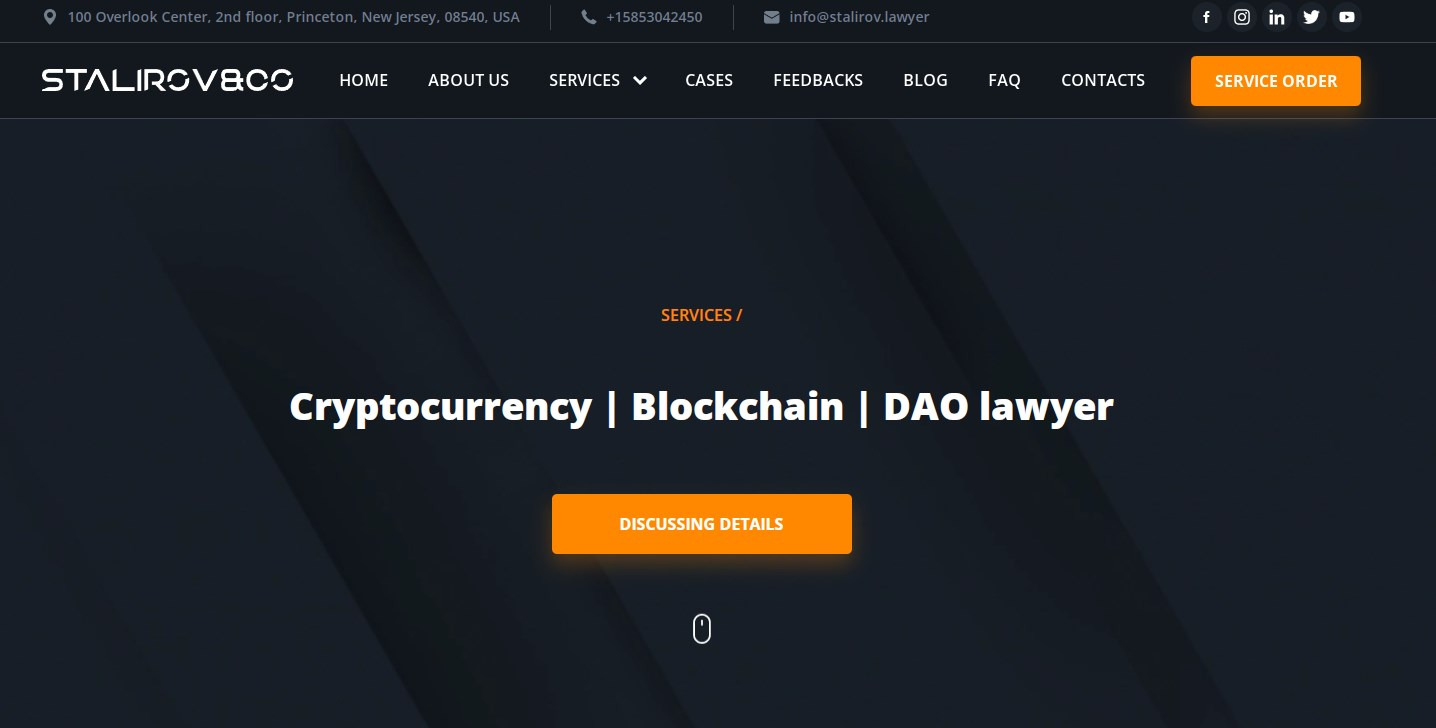
Stalirov & Co walks clients through MSB registration with FinCEN in the US. They handle Money Transmitter Licenses across the US states. They cover CASP licensing under MiCA in Europe. VARA licensing in the UAE. Payment Services Act licensing in Singapore. Offshore jurisdictions too: Cayman Islands, British Virgin Islands, The Bahamas, each under their own VASP rules.
The firm has supported Intellabridge through a full legal and compliance review of subscriber maintenance processes and advised Hasher Wallet on aligning terms of use and privacy policy with product architecture.
What makes them different: They watch enforcement trends closely. Their material does not stop at getting the license. They explain how regulators audit firms after approval, which is where most companies run into trouble.
Best for: Projects that need detailed regulatory breakdowns across multiple regions, especially startups aiming at the US, EU, UAE, or Singapore.
What to Ask Before Hiring
Skip the marketing language. Ask things that show how they work when something goes sideways:
“How many licenses did you get in the country I want during the last year?” Recent approvals tell you more than a website timeline. Rules shift faster than most people notice.
“When the regulator sends questions, who answers and how quickly?” Do they handle it directly? Or does the email sit in someone’s inbox for two weeks?
“What do you leave behind after the license arrives?” Some firms drop off a PDF. Others install a functioning compliance operation.
“Who works on my file day to day?” Is one named person or whoever free that week? Months of back and forth need consistency.
“What do your clients say about how quickly you reply?” Licensing involves long waiting stretches and sudden urgent requests. Slow responses cost time.
Final Thoughts
The firms listed here all deliver licenses. That is the baseline requirement. The difference is in what happens after.
Some hand you the license and disappear. Others stick around for the compliance reports, the regulator questions, the annual renewals. Some design your entire corporate structure so you can add licenses later without rebuilding everything from scratch.
A crypto license in 2026 starts a relationship that keeps going. Regulators expect regular reporting. They want to see policy updates. They conduct compliance audits. The license is the beginning, not the finish line. Working with experienced lawyers for obtaining a crypto license means you get more than paperwork; you get a partner who understands how to keep your operation compliant as rules change.
The question is not just who can get you a license. It is who can keep you licensed. The best lawyers for obtaining crypto license understand this distinction and build their client relationships around long-term operational support rather than one-off transactions.

Mark is an experienced internet entrepreneur and marketer whose career in lead generation started relatively recently but has quickly gained momentum. He/she has in-depth knowledge of internet marketing and customer acquisition strategies.